Short answer
Waking up with lower back pain is usually mechanical: sensitive joints and muscles that stiffened overnight after a busy day, a hard session or an awkward position. It often eases within 30–60 minutes of moving and settles within days. Pain that is severe at night, comes with fever or numbness, or keeps getting worse needs a proper assessment.
Watch: Lower Back Pain Explained: Disc, Facet Joint, SI Joint & Piriformis Syndrome
Common causes
Load from the day before
A heavy gym session, gardening or a long drive often shows up the next morning, not in the moment.
Sleeping position
Lying flat on your stomach or in one position for hours can leave sensitive joints stiff.
Disc-related morning stiffness
Discs hold more fluid overnight. Pain that is worst bending forward in the morning and better later in the day fits this pattern.
Inflammatory back pain
Stiffness that lasts over an hour, improves with exercise and wakes you in the second half of the night can point to an inflammatory condition. This needs a doctor’s review.
What usually helps right now
- Get moving gently: a short walk often helps more than lying back down.
- A warm shower or heat pack eases morning stiffness.
- Avoid heavy bending and lifting for the first hour after waking.
- Try sleeping on your side with a pillow between your knees.
- Keep training, but drop the load on whatever aggravated it.
What to avoid
- Long periods of bed rest.
- Aggressive stretching first thing in the morning.
- Assuming your mattress is the cause before ruling out what you did the day before.
When to book an assessment
- It is not improving after a week.
- It keeps coming back every few weeks.
- It stops you training or sleeping.
Get urgent medical care if
- Numbness around the groin or saddle area, or changes in bladder or bowel control: go to an emergency unit now.
- Fever, unexplained weight loss or a history of cancer.
- Night pain that does not change with position.
How we treat it
- AssessHistory, movement and clinical tests, with screening for anything that needs a doctor.
- ExplainA clear diagnosis in plain language, and what recovery usually looks like.
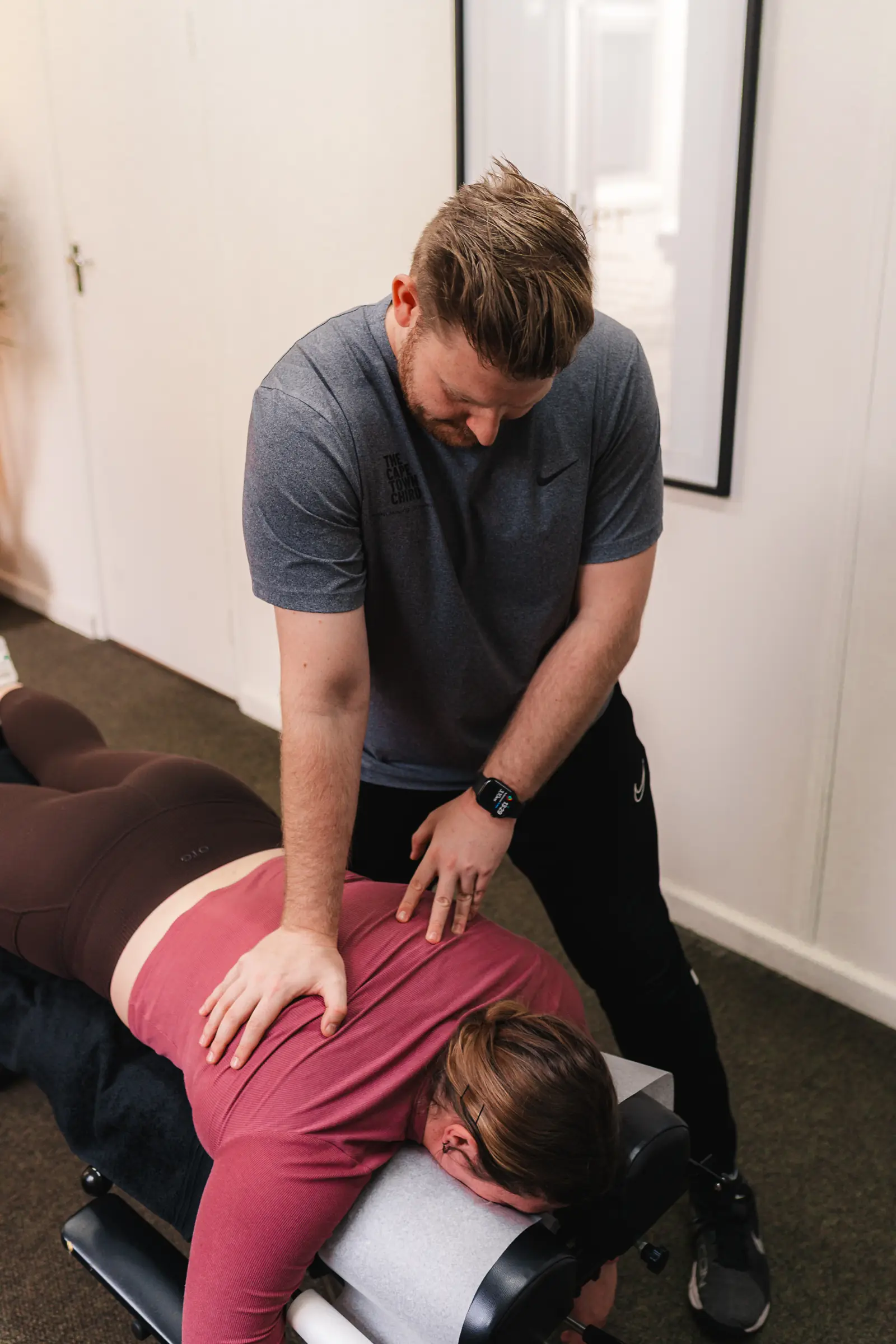
- TreatHands-on care where it helps: joint and soft tissue work, dry needling or adjustments.
- RebuildExercises and a training plan so it holds up, with an end point.
Questions
Is my mattress causing my back pain?
Sometimes, but less often than people think. Medium-firm mattresses tend to do best in studies. If the pain started after a busy day rather than a new mattress, start there.
Should I stretch when I wake up with back pain?
Gentle movement is good. Forceful stretching of a sensitive back first thing in the morning often aggravates it.