Short answer
The sled push and pull are heavy, grinding efforts done while tired, often after running. Lower back pain from sled work is usually muscle and joint overload from volume, weight or fatigue. Keep training, reduce sled load and volume for a short period, and build back towards race weight in stages.
Watch: Lower Back Pain Explained: Disc, Facet Joint, SI Joint & Piriformis Syndrome
Common causes
Heavy sleds when fatigued
Form changes when you are tired from running.
Volume
Several sled sessions a week in race build-up.
Surface
Sticky gym turf makes sleds much heavier than expected.
What usually helps right now
- Reduce sled weight and distance for one to two weeks.
- Keep running and other stations if they do not aggravate it.
- Add trunk and hip strength work.
What to avoid
- Testing race weight while sore.
- Stacking sled work on consecutive days.
When to book an assessment
- Pain is lasting more than a week.
- Race day is approaching.
Get urgent medical care if
- Leg numbness or weakness, or changes in bladder or bowel control: seek urgent care.
How we treat it
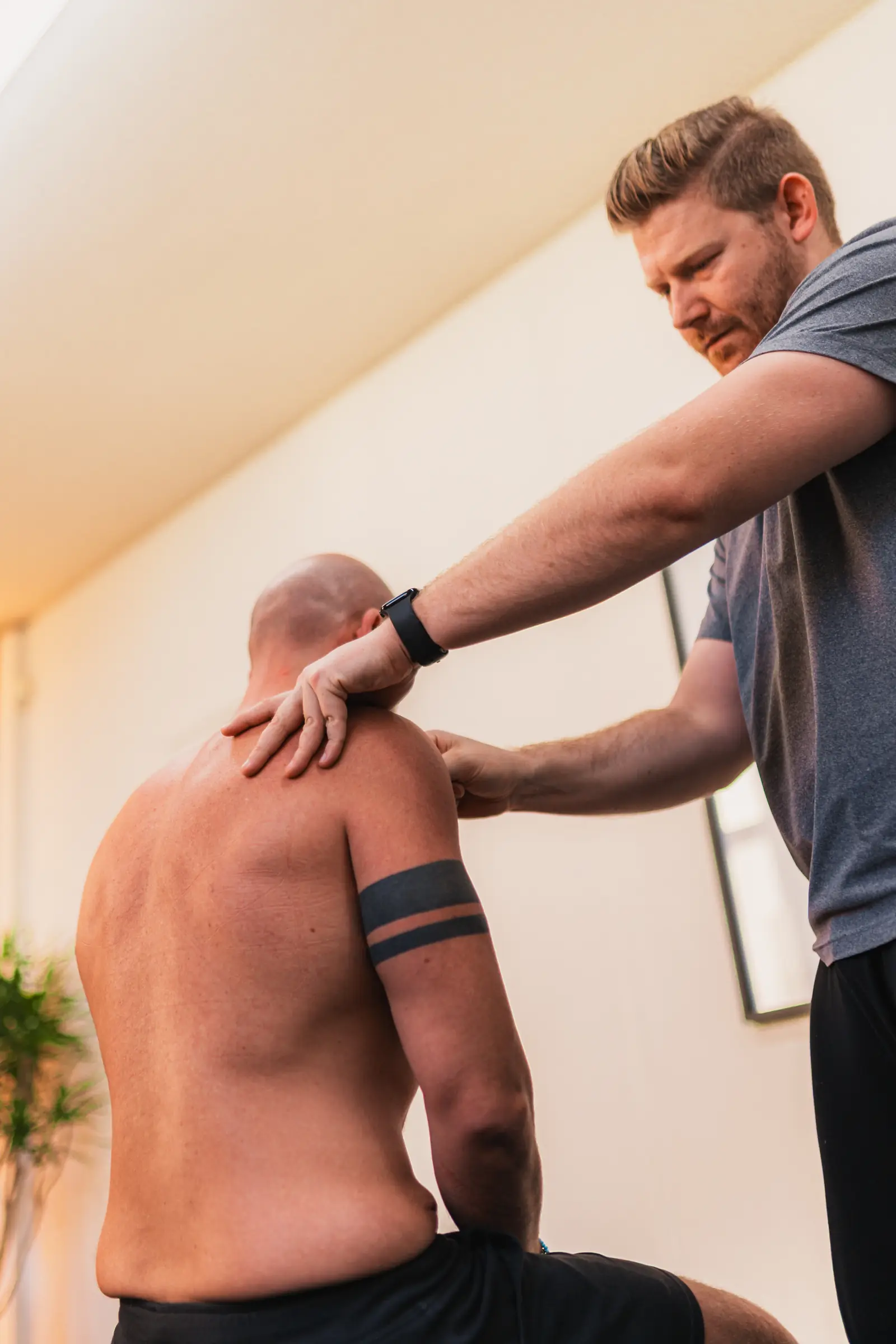
- AssessHistory, movement and clinical tests, with screening for anything that needs a doctor.
- ExplainA clear diagnosis in plain language, and what recovery usually looks like.
- TreatHands-on care where it helps: joint and soft tissue work, dry needling or adjustments.
- RebuildExercises and a training plan so it holds up, with an end point.
Questions
Is sled push bad for your back?
No. It is usually well tolerated. Problems come from load, volume and fatigue.
Can I still race HYROX?
Usually yes, with a plan that rebuilds sled capacity in time.